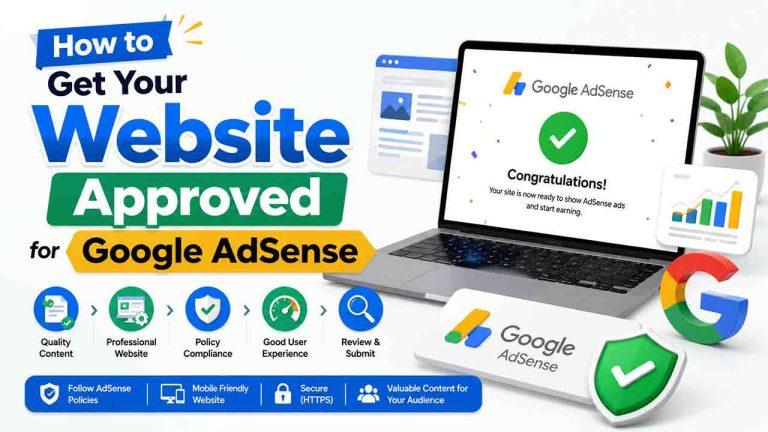

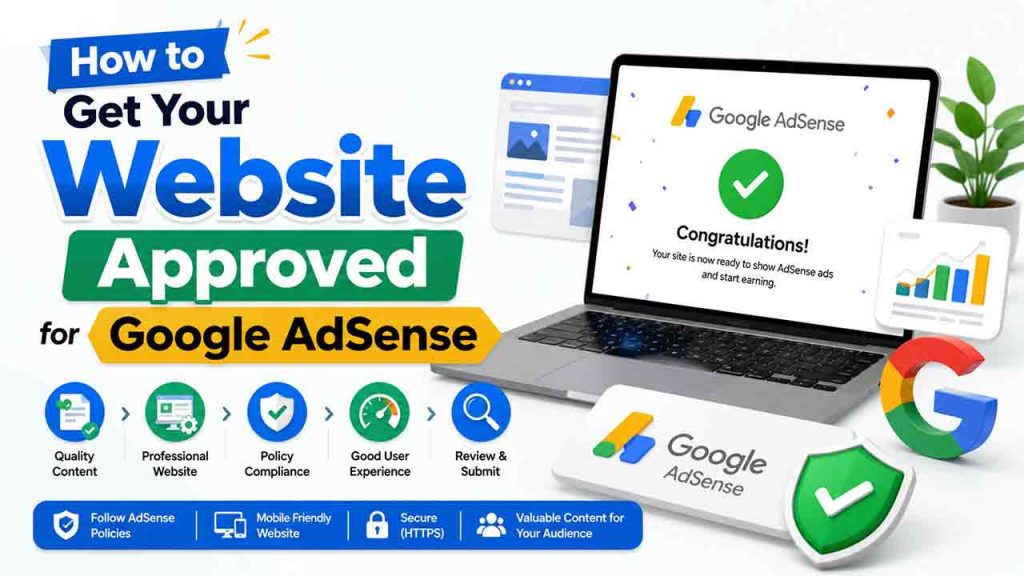





Dreaming of turning your website traffic into a steady income stream? Google AdSense is one of the most popular ways for publishers to monetize their passion. However, getting your website approved for Google AdSense can feel like an uphill battle. Many creators get rejected on their first try without understanding why.
The truth is simple. Google wants to protect its advertisers and provide a safe environment for users. Getting approved requires more than just launching a basic blog. It demands a commitment to high-quality content, clean technical setup, and a user-first mindset. This comprehensive guide will show you exactly how to optimize your platform to pass Google’s strict review process.
1. Demystifying Google AdSense Eligibility Requirements
Before hitting the submit button, you must understand the basic rules. Google looks for specific administrative and structural foundations during its review.
- Age Requirement: You must be at least 18 years old to create an AdSense account.
- Site Ownership: You must own the website and have full control over its backend. You need the ability to edit the site’s HTML source code to insert the AdSense verification snippet.
- Domain Age: In some regions, like China and India, Google requires your website to be active for at least six months. This rule prevents spam sites from clogging the ad network.
Meeting these basic requirements ensures your application doesn’t get automatically filtered out by the system.
2. AdSense Program Policies: Your Foundation for Success
The easiest way to get rejected is to ignore the Google AdSense Program Policies. Google uses strict automated filters and human reviewers to check your compliance.
Avoid Prohibited Content
Your website must remain entirely free of restricted material. If your site features any of the following, remove it immediately before applying:
- Adult or sexually explicit material.
- Promotion of illegal activities or dangerous products.
- Hate speech, violence, or harassment.
- Copyrighted material used without permission (pirated software, streams, or music).
Focus on True Originality
Google will quickly reject websites packed with thin, scraped, or auto-generated text. If your content looks like a copy-paste job from other blogs, you will fail the review. Your site needs a clear, unique purpose that provides genuine value to real readers.
3. Technical Readiness Checklist
A professional backend matters just as much as your front-facing layout. Google needs to know that your platform is modern, stable, and highly secure.
| Technical Element | What Google Looks For | How to Fix It |
| Navigation | Clean, predictable menus | Use a simple header menu. Fix all broken links. |
| Mobile Readiness | Flawless display on mobile screens | Use a fully responsive theme. Test it via mobile devices. |
| Site Speed | Rapid loading times under 3 seconds | Compress your images. Use a reliable web hosting provider. |
| Security | Active SSL certificate | Ensure your URL starts with https:// instead of http://. |
4. Crafting High-Quality, Original Content
Content is the single most critical factor to get your website approved for Google AdSense. Google looks for deep, well-researched pieces that keep readers engaged.
Pick a Clear Niche
Do not try to write about everything at once. General blogs covering news, tech, cooking, and finance all on one page rarely get approved. Focus tightly on one specific niche. A focused site establishes quick authority, making it highly appealing to advertisers who target specific audiences.
Prioritize Evergreen Articles
Write detailed, comprehensive guides that remain relevant for years. Step-by-step tutorials, foundational educational guides, and resource lists attract steady traffic over time.
Aim for Content Volume
While there is no official minimum page count, applying with 3 or 4 short blog posts looks unfinished. Aim to publish at least 15 to 25 high-quality articles. Make sure each post is at least 800 to 1,200 words long. This depth proves to Google that your platform is a robust, active resource.
5. Optimizing User Experience (UX)
Google monitors user engagement closely. If visitors bounce away from your site within seconds due to an ugly layout, you may face rejection.
Keep your layout clean and easy on the eyes. Avoid excessive pop-ups, flashes, or aggressive sidebars. Ensure your font size is large enough to read easily on a phone. Use whitespace generously to separate text blocks.
Organize your content categories logically. Implement internal links to connect related articles. This strategy helps readers explore your site deeply while making it incredibly easy for Google’s web crawlers to index your pages.
6. Creating Essential Legal Pages
Transparency builds immense trust with Google’s evaluation team. Every candidate hoping for a website approved for Google AdSense must host specific informational pages. Place links to these pages clearly in your footer menu.
- Privacy Policy: This page is mandatory. You must explicitly inform users that third-party vendors, including Google, use cookies to serve ads based on prior visits.
- Terms of Service: Outline the rules for using your platform.
- About Us: Introduce yourself or your team. Explain your background, mission, and expertise to prove you are a real person running a legitimate business.
- Contact Us: Provide a functional contact form or a professional email address so users can reach you directly.
7. Building Organic Traffic First
You do not need millions of visitors to get approved, but you do need an active audience. A site with zero traffic signals to Google that the platform offers minimal real-world value.
Implement strict SEO best practices to jumpstart your traffic:
- Conduct keyword research to discover what your audience is searching for.
- Place your target keywords naturally in your titles, headings, and intro paragraphs.
- Share your articles on relevant social media channels to generate early momentum.
- Focus on earning high-quality backlinks from reputable websites in your niche.
8. What to Expect During the Application Process
When your site is completely optimized, head over to the Google AdSense dashboard to apply.
[Sign Up] ➔ [Submit URL & Details] ➔ [Insert AdSense Header Code] ➔ [Wait for Review]
You will receive a custom snippet of code to place directly inside the <head> tag of your website. Keep this code live on every page. Google will run automated checks followed by manual human reviews. This entire vetting process can take anywhere from 48 hours to three full weeks.
Dealing with an AdSense Rejection
If your application gets denied, do not panic. Google almost always provides a generalized reason, such as “Valuable Inventory: No Content” or “Site behavior: Navigation issues.”
Review the feedback objectively. Write more thorough content, fix your mobile menus, or clear out low-value pages. Once you fix the core issues, simply log back into your dashboard and request a re-review. Consistent refinement is the key to eventual approval.
Frequently Asked Questions
How long does it take to get a website approved for Google AdSense?
The review process typically takes between a few days to two or three weeks. Google evaluates both your code implementation and content quality during this window.
Can I apply for AdSense using a free Blogger or WordPress.com site?
Yes, but you must apply directly through their respective platforms. However, using a custom domain name (like .com) dramatically improves your professionalism and speeds up your chances of approval.
How many articles do I need before applying?
There is no official rule, but a safe benchmark is 15 to 25 deeply researched, original articles that provide clear value to your readers.
Ready to Turn Your Traffic into Revenue?
Getting your website ready for monetization does not have to be a guessing game. Focus on clean layouts, transparent legal pages, and exceptional content that solves real problems for your readers. By treating your blog like a professional publication from day one, you position yourself perfectly for a successful application.
Take a close look at your current layout today, fix your navigation, and build the foundation needed for a thriving online business!
Frequently Asked Questions
Can I apply for AdSense with a brand new website that has very little content?
While not explicitly prohibited, a brand new site with minimal content is unlikely to get approved. Google prioritizes high-quality, original, and valuable content, demonstrating a clear purpose and benefit for visitors. Focus on building a substantial body of useful content before applying to increase your chances.
If my website contains some content generated by AI, will it automatically be rejected by AdSense?
AdSense policies emphasize original and high-quality content. While AI-generated content isn't an automatic disqualifier, if it lacks genuine value, originality, or appears purely auto-generated, it can be a red flag. Ensure any AI-assisted content is heavily edited and provides real benefit to users.
My website uses a free blogging platform like WordPress.com or Blogger. Can I still apply for AdSense?
You need to own and have full control over the website, including the ability to edit its HTML source code. While some free platforms offer limited control, a self-hosted WordPress site or a custom domain on Blogger generally provides the necessary control for AdSense integration. Check your platform's specific terms.
I have another ad network running on my website. Do I need to remove it before applying for AdSense?
Google's policies state your site shouldn't contain intrusive ads from other networks that disrupt user interaction or mislead visitors. While having other ads isn't an automatic rejection, ensure they don't violate AdSense policies regarding user experience or content interference. It's often safer to minimize other ad networks during the application process.
How long does the AdSense approval process typically take after submitting an application?
The article doesn't specify an exact timeframe, but the approval process can vary. It involves Google reviewing your site against their extensive policies for content quality, technical readiness, and user experience. It's best to ensure your site is thoroughly prepared before applying to avoid delays or rejections.